How Lowering Your Thermostat at Night Impacts Natural Gas Bills
Many homeowners wonder if dropping their thermostat a few degrees during the night really makes a difference in their natural gas bills. The short answer is yes—lowering your thermostat at night can often translate into noticeable savings over time. But the exact amount you save depends on various factors, such as the size of your home, the type of heating system you use, the quality of insulation, and even your local climate. Below, we’ll take an in-depth look at why turning down your thermostat at night is a widely recommended practice, and how you can do it effectively for the best results.
Why Turning Down the Thermostat Saves Energy
To understand how this technique works, it helps to consider how your heating system consumes energy. When you set your thermostat to a lower temperature, your furnace or boiler runs less frequently. This reduces the overall load on your heating equipment, which in turn lowers your natural gas usage. During the night, most people find they can sleep comfortably in a cooler environment—so you’re not only benefiting your wallet, but also enjoying a sleeping temperature that many people find more pleasant.
Heat naturally moves from warm areas to cool areas. When you lower the indoor temperature, the difference between the outdoor and indoor temperature decreases, slowing down heat loss through walls, windows, and other surfaces. This phenomenon helps conserve the energy your home uses to keep rooms warm, so you don’t have to burn as much natural gas to compensate for lost heat.
Recommended Nighttime Temperature Settings
While everyone’s comfort level differs, a few guidelines can help you find a balance between maximizing savings and maintaining a cozy atmosphere:
- Set the thermostat a few degrees cooler than daytime: Many experts suggest lowering your thermostat by around 3–8 degrees Fahrenheit (around 2–5 degrees Celsius) at night. Some people go lower, especially if they use warm blankets or prefer a cooler room for sleeping.
- Factor in your morning routine: If you wake up early, program your thermostat to return to a comfortable temperature a short while before you get out of bed. This ensures your home is warm enough when it’s time to start the day.
- Stay consistent: If you fluctuate wildly in your thermostat settings, your system may end up working harder than necessary. Aim for a stable nighttime temperature so energy usage remains predictable.
Realistic Expectations for Savings
Setting your thermostat lower for 6–8 hours every night can lead to energy savings, but the exact dollar amount varies. According to common estimations, you might save about 1% on your heating costs per degree that you lower the thermostat, if you keep that reduction in place for a significant period each day. While that might not sound like a large percentage, it can add up over an entire heating season. And if you’re in Alberta, the heating season can be lengthy, making even marginal savings more substantial by the time spring arrives.
Of course, every home has unique factors, from insulation quality to floor plan. Drafty doors, older windows, and other forms of heat loss can diminish the impact of turning your thermostat down at night. However, in combination with other energy-efficient measures, this strategy typically makes sense for most households looking to reduce their natural gas bills.
Beyond Temperature: Additional Nighttime Energy Tips
While lowering your thermostat is a solid first step, there are other straightforward ways to save energy and cut costs during the night:
- Use proper bedding: Warmer blankets and appropriate sleepwear help keep you comfortable, preventing you from cranking the heat up in the middle of the night.
- Block drafts: Sealing cracks around windows, doors, and baseboards goes a long way toward retaining the heat you do generate. Caulking, weatherstripping, and even simple draft stoppers can help.
- Close curtains or blinds: This adds an extra layer of insulation between your heated indoor air and the cooler outdoor environment, especially if you have windows that are prone to losing warmth.
- Check appliance usage: Electronics and lights left on during the night might not use a huge amount of energy individually, but combined over time, they can contribute to higher utility bills. Switching them off when not in use is an easy win.
Using a Programmable or Smart Thermostat
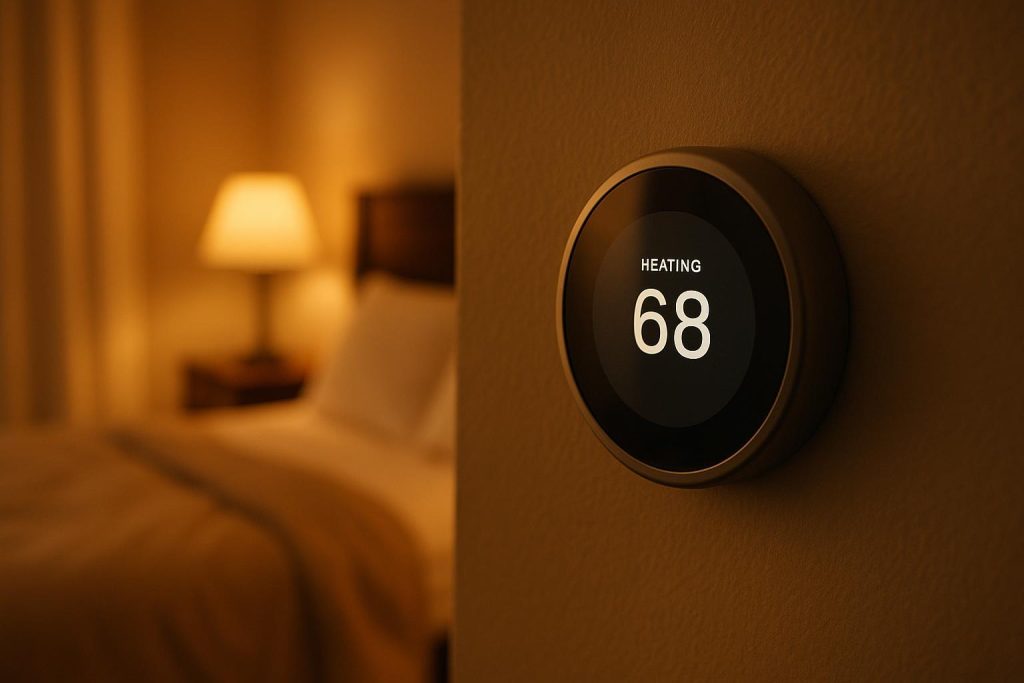
One of the easiest ways to stick to a nightly temperature change is using a programmable or smart thermostat. Modern thermostats let you set different temperatures for different times of day, automating the entire process. Here’s how you can benefit:
- Automated schedules: You can program a lower temperature for bedtime and return it to your normal level shortly before you wake up.
- Remote control: Many smart thermostats offer smartphone or internet-based controls, so you can tweak settings if your schedule changes. This can be especially useful if you travel frequently.
- Energy usage insights: Some devices provide data reports, displaying how often your furnace runs and how much energy you’ve likely saved. This real-time information can help you fine-tune your settings for better results.
Potential Downsides and How to Address Them
While lowering your thermostat at night is usually beneficial, there are a few considerations to keep in mind:
- Comfort concerns: Some people are extra sensitive to cold. If you or someone in your household finds it uncomfortable, try reducing just a few degrees. Gradual changes can help you adapt without shock to the system.
- System recovery time: Some older or less efficient furnaces might take longer to warm your home back up in the morning. If you notice a slow recovery, program the thermostat to start heating a bit earlier.
- Health or safety issues: In extremely cold environments, turning the heat down too far could risk frozen pipes or other damage. Always ensure your home remains at a safe temperature, typically above the mid-to-high teens Celsius (60s Fahrenheit) even at night.
The Alberta Perspective
For Albertans who experience a wide range of winter temperatures, managing heating costs can feel like a never-ending puzzle. That’s where a strategic thermostat setting really shines. A few degrees can make a big difference when the temperature outside regularly dips well below freezing. Couple that with an Alberta-based energy provider offering competitive rates, and you’ll have more control over your household expenses.
For those looking for an approachable partner in the Alberta energy market, it may help to research local companies that focus on flexible plans for both Electricity and Natural Gas. Since heating needs and electricity usage often go hand in hand—especially regarding fans and blowers in forced-air systems—having reliable service and a plan that aligns with your energy consumption patterns can boost overall savings.
Pairing Thermostat Adjustments with a Suitable Natural Gas Plan
Lowering your thermostat is a great start, but combining it with a natural gas plan that fits your usage patterns can amplify your savings. For example, some providers might offer fixed-rate plans, letting you lock in your rate for greater cost predictability. Others provide variable-rate options, suitable if you appreciate market-based pricing and want to take advantage of seasonal dips.
Peace Power, as an example of an Alberta-based provider, offers Natural Gas services along with local support, making it simpler for residents to choose rates that work best for them. By selecting a plan that aligns with your usage—then lowering your thermostat at night—your monthly bills might become far more manageable.
Common Misconceptions About Turning Down the Thermostat
One misconception is that it takes so much energy to heat the house back up that any savings from lowering the thermostat are erased. But this isn’t accurate in most cases. Generally, the longer your home remains at a reduced temperature, the more energy it saves. Even if your furnace works a bit harder in the morning, that spike is typically offset by the hours of reduced operation overnight.
Another myth is that setting your thermostat to an extremely low temperature will instantly cool the house and somehow result in greater savings. In reality, you can’t force your home to lose heat faster by shifting the thermostat. Consistency and a balanced approach usually pay off more effectively.
Practical Steps to Make the Most of Nighttime Thermostat Adjustments
To achieve the best outcomes when reducing nighttime temperatures, consider these practical steps:
- Start small: If you’re not used to a cooler nighttime environment, drop the temperature by just 1–2 degrees at first. See how you feel, then adjust further if it’s tolerable and comfortable.
- Upgrade insulation: Improving insulation and sealing air leaks are among the most cost-effective ways to preserve indoor warmth. That means each degree you lower the thermostat goes further in reducing natural gas usage.
- Use gentle reminders: If you don’t have a programmable thermostat, set a daily reminder on your phone to turn down the temperature before bedtime.
- Check furnace filters regularly: A clogged or dirty filter can force your heating system to work harder, undercutting any progress you make by lowering the thermostat. Clean or replace filters as recommended.
Long-Term Benefits of Smart Heating Habits
Making small but consistent changes in your heating approach can yield significant long-term benefits, from reduced bills to environmental advantages. Here’s what you can expect over time:
- Lower overall utility costs: Even if the monthly bill reduction seems small at first, remember that winter can last for several months in Alberta. Over multiple seasons, those savings accumulate.
- Improved system lifespan: When your furnace runs less frequently, it generally experiences less wear and tear, potentially extending its operational life. That can save you money on costly repairs and replacements.
- Greater control: Once you get comfortable with programming your thermostat or consistently turning it down at night, you’ll have a substantial amount of control over your natural gas usage year-round.
- Positive habits: Adjusting your thermostat can inspire other energy-efficient behaviors in the household, such as washing laundry in cold water or reviewing rates for better service plans. Over time, these simple steps can evolve into broader changes that enhance your home’s overall efficiency.
Key Takeaways
In most cases, lowering your thermostat at night does significantly help you save on natural gas costs over the long term. The practice uses the natural dip in household heating requirements while everyone sleeps, enabling you to reduce your furnace runtime and usage of natural gas. Pairing this habit with a well-chosen energy plan in Alberta—one that offers competitive rates and supportive customer service—can boost those savings and keep your home comfortable.
If you’re already doing simple and affordable things like sealing drafts, using energy-wise habits, and selecting reliable service from an Alberta-based provider, turning down your thermostat at night might be the missing piece. It’s a low-effort measure that tends to pay off in both comfort and cost-savings, making it a practical strategy for anyone aiming to manage natural gas bills more effectively.