
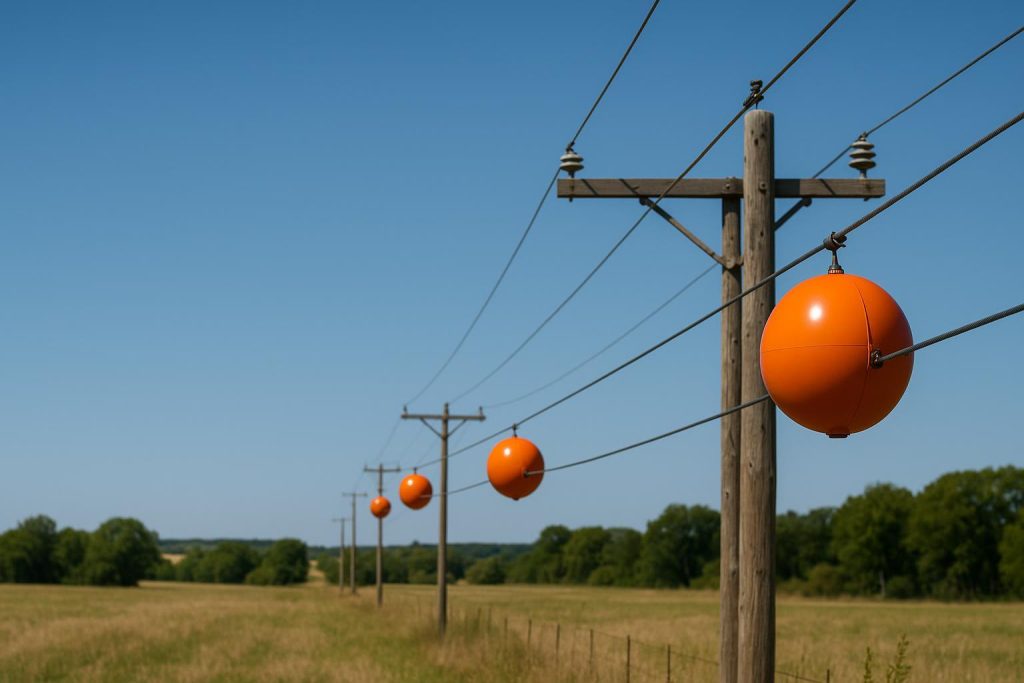
Understanding Those Big Round Objects on Power Lines
When you see large, brightly colored spheres attached to power lines, it can be puzzling at first. These “marker balls” or “aerial marker spheres” serve a crucial safety function. Power lines can be difficult to spot from above, especially for low-flying aircraft like helicopters or small planes. By placing these round markers at strategic intervals, utility companies help pilots clearly identify the lines and avoid potential collisions. Visual markers are especially valuable near airports, mountain passes, and areas where aerial traffic is common.
The colors of these balls are chosen to stand out against a variety of backgrounds and weather conditions. Orange and yellow are popular because they contrast with blue skies, gray clouds, green trees, and the horizon. In some regions, you might see more than one color on a single span of line to improve visibility and alertness for passing aircraft. Although they look unusual from the ground, the marker balls are lightweight, durable, and designed to withstand extreme temperatures and wind speeds, making them well-suited to Alberta’s diverse climate.
Beyond aviation safety, you may wonder if these markers play any role in your home or business electricity costs. Generally, the infrastructure around power lines—whether it’s markers, towers, or specialized equipment—contributes to the overall transmission and distribution costs on your monthly bill. If you’d like to learn more about how these charges fit into your total electric rate, you can check out our Rates page. Staying informed about your local transmission system can also provide peace of mind, whether you’re a homeowner, renter, or a small business owner interested in how utilities operate.
Ultimately, marker balls are all about prevention. They keep line workers, residents, and air crews safe, and help maintain reliable service by reducing the risk of damage to overhead lines. So the next time you spot those big round objects on power lines, know that they’re there to protect everyone below—and above—them.