
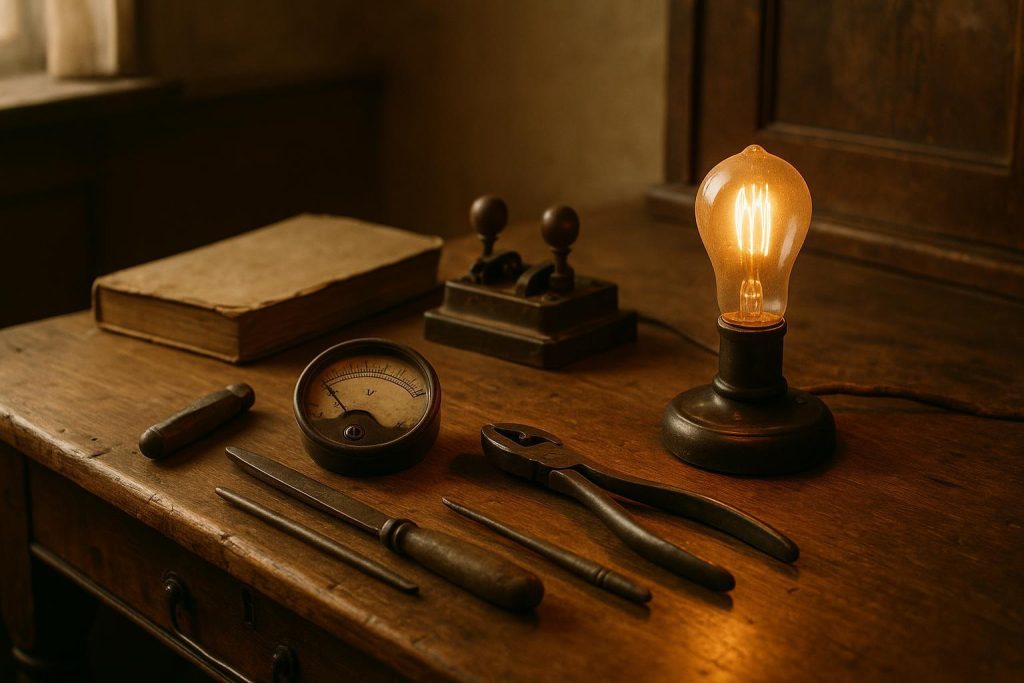
The Pioneering Journey of Electricity
Electricity has transformed every aspect of modern life, from how we illuminate our homes to how we power our devices. Yet, when we talk about the first country to make public use of electricity, the conversation often points to one place: the United Kingdom. Indeed, the UK is credited with being the first to implement a public electricity supply, marking an essential milestone in the global spread of electric power. In 1881, the small town of Godalming in Surrey, England, became a centerpiece of history when it launched the world’s first public electricity supply for streetlights and local premises. This groundbreaking moment paved the way for rapid developments in electrical infrastructure worldwide.
In this article, we’ll explore how electricity came to be used in a public context, the UK’s pioneering role, how other nations soon followed suit, and the broader implications for everyday life. We’ll also discuss how electricity is distributed today, including some insights for residents in regions like Alberta, Canada, where deregulation allows people to choose providers according to their needs. By examining the origin and evolution of electricity usage, we get a clearer picture of how this once novel technology has become essential in modern society.
Understanding Early Electrical Discoveries
The concept of electricity dates back to ancient times, though early civilizations only understood static electricity phenomena and had no way to harness it for practical use. One of the earliest recognized experiments in electrical theory was conducted by Benjamin Franklin in the 18th century, attempting to prove the connection between lightning and electricity. However, while Franklin’s work was significant for scientific understanding, it did not drive the immediate development of electrical infrastructure in everyday life.
Additional figures like Alessandro Volta, Michael Faraday, and André-Marie Ampère laid much of the groundwork for our modern electrical systems. Their research in electromagnetism, the creation of the electric battery, and the principles of electrical current were all stepping stones. Yet, converting these scientific breakthroughs into a functioning public supply network was a leap that came later, championed by inventors and engineers who turned academic theories into real-world applications.
Why the United Kingdom?
The late 19th century was a period of industrial progress and fierce competition among various technological developments. Britain, as a leading industrial power during the Victorian era, had both the resources and the industrial base to experiment with new technologies. Thus, private investors and local authorities in the UK were poised to explore the commercial and practical potential of electrical power.
London and other British cities had been rapidly growing, and gas lighting was common. However, the quest for better, cleaner, and more efficient lighting solutions spurred interest in electricity. In response, local entrepreneurs, engineers, and municipal leaders worked together to create small-scale prototypes for electric lighting and distribution. Godalming’s system in 1881, though modest by today’s standards, was a triumph of technology at the time: it brought electric street lighting to the public domain, demonstrating that electricity had outgrown the realm of laboratory experiments and was ready for everyday implementation.
Godalming: A Milestone in Public Electricity
The choice of Godalming was no accident. As a smaller town near London, it was easier to implement pilot initiatives there than in the densely populated capital. The system itself was initially powered by a dynamo connected to a water wheel on the River Wey, highlighting the innovative mix of water power and electrical generation. Although the early attempt faced technical and financial hurdles—including the challenge of meeting peak demand in the evenings—it succeeded in proving that public electricity was more than a theoretical dream. Other towns, both in Britain and abroad, closely watched Godalming’s progress, recognizing the transformative potential of a publicly accessible grid.
Spreading Across the Globe
- The United States: Soon after the UK success, the U.S. made its own strides in publicly available electricity. Thomas Edison established the first commercial electric power station at Pearl Street in Manhattan in 1882, enlightening a portion of New York City. George Westinghouse, another American inventor-entrepreneur, would eventually champion the use of alternating current (AC), paving the way for large-scale electricity generation and transmission across the nation.
- Continental Europe: Countries such as Germany, France, and Italy picked up on the trend. Major cities began to install electric streetlights, powering trolleys and early forms of public transport. Berlin, Paris, and Milan experimented with shared grids to power both lighting and emerging electrical appliances. These experiments shifted public opinion as people saw firsthand the convenience of electric lighting and how it improved both safety and nightlife.
- Canada and Beyond: Canadian cities, many influenced by British engineering, also caught on to the wave of electrification. Early hydroelectric projects, like those at Niagara Falls, acted as cornerstones for large-scale power generation. Across the world, from Australia to parts of Latin America, the blueprint set by places like Godalming and Manhattan demonstrated how to build and operate publicly accessible electrical systems.
Technological Innovations Between 1880 and 1920
The decades following Godalming’s achievement brought a surge in innovations that steadily improved the reliability and scope of electricity distribution. Among the most critical were:
- Transformer Technology: The ability to step voltage up or down efficiently allowed electricity to travel over greater distances without significant power loss.
- High-Voltage Lines: As engineers gained a deeper understanding of electrical insulation and materials, constructing high-voltage power lines became more practical, enabling large-scale coverage.
- Public Safety Measures: Early distribution experiments exposed the need for standardized safety codes. Governments, utilities, and inventors worked together to develop guidelines to prevent fires and accidents, rendering electricity safer for widespread use.
By the early 20th century, many urban areas around the world had electric lighting in streets and buildings, with an ever-growing list of appliances—like electric fans, irons, and later radios—becoming part of daily life. Over time, the shift from gas to electric lighting accelerated, making night-time activities more practical and enjoyable in many major cities. This surge in electrification proved transformative, bringing not only convenience but also stimulating industries to develop new machinery, consumer products, and electrified public transport systems.
Electricity in Everyday Life Today
Looking at the 21st century, it’s almost impossible to imagine life without electricity. Homes, businesses, factories, and infrastructure all rely on a stable supply. The expansion from lighting to every aspect of modern technology highlights just how integral electricity has become. From powering smartphones to running large hospitals, the applications are endless. This widespread reliance traces back to the pioneering decision in towns like Godalming to invest in a public supply system, proving that electricity was not just for a privileged few, but for society as a whole.
Today, many regions, including areas of Canada such as Alberta, enjoy a deregulated electricity market that gives consumers the freedom to choose their provider. This fosters competition and often leads to more flexible options. If you live in an area with a deregulated market, you can look for competitive rates, fixed-rate or variable-rate plans, or simply an approach that is more in tune with your household’s pattern of electricity usage. Access to electricity in this personalized manner resonates with the original public-minded spirit that sparked the earliest adoption of electrical grids worldwide.
Local Support and Consumer Choice
In the same way that British municipalities in the 19th century sought to serve residents with advanced lighting options, utility providers today strive to meet the modern consumer’s needs. Companies that focus on local support and straightforward energy plans can help individuals and businesses manage their costs while enjoying reliable service. Residents can often “choose your plan” if they want a fixed-rate contract to lock in costs or a variable-rate plan that tracks market trends. Flexible options can empower customers to control their monthly expenses.
For instance, if you’re curious about reshaping your monthly spending on energy, you might start by exploring Electricity Services pages from local providers. Gathering details about simple and affordable electricity plans can help you decide if it’s time to switch or negotiate a better deal. In a modern context, it’s remarkable to consider how far we’ve come from those early days in Godalming. The drive for improved lighting and safer energy sources now translates into an open marketplace in some regions.
Worldwide Impact of the UK’s Early Initiative
Although public electricity in the UK began with a modest, experimental setup, the ripple effect was immediate and global. Observers across continents saw that electric lighting could offer a cleaner, more efficient alternative to gas lamps. As the idea took hold, entrepreneurs and government bodies began investing heavily in infrastructure projects that delivered electricity to the masses. Over time, electrical grids connected distant regions, leading to economic development and modernization in even remote areas. The UK’s foray established a roadmap that others could refine and scale, helping them avoid early pitfalls and learn from existing methods of generation and distribution.
It’s easy to overlook how monumental a change electricity brought about. For most of human history, once the sun went down, activities were limited by dim lighting or candle power. The shift to widespread electric lighting extended working hours, boosted leisure activities, and radically altered public safety in urban and suburban spaces. As electrification expanded, it also unlocked the door to modern communication technologies—like the telegraph, telephone, and eventually radio and television—by providing the stable current those devices required. Had it not been for those first bold steps in places like Godalming, the technology that many of us rely on daily might have been delayed by decades or taken a very different form.
How Different Countries Adapted
Many nations that witnessed the UK’s success sought to avoid reinventing the wheel. They sent engineers to London or hired British experts to design their own distribution networks. Meanwhile, some countries embraced alternative approaches, employing water turbines to power dynamos in areas with plenty of freshwater resources, or turning to steam-powered plants in proximity to coal fields. The unique conditions in each region—climate, geography, political structure—shaped how and when electricity arrived. Yet, the guiding principle was the same: to harness an energy source capable of powering breakthroughs in industry, transport, and everyday convenience.
Challenges and Progress
Early on, a common obstacle was the lack of a standardized system. Should towns adopt direct current (DC) or alternating current (AC)? How should they navigate regulatory hurdles or manage public apprehension over new technologies? Overcoming these issues often required collaboration: local governments, inventors, and entrepreneurs teamed up to find solutions. By the start of the 20th century, AC systems were becoming standard for public grids because they were better at transmitting electricity over long distances.
Progress didn’t stop there. As the 20th century unfolded, fluctuations in oil prices, environmental awareness, and new scientific discoveries all influenced how electricity was generated. Coal-fired stations dominated early power generation, later giving way to oil, natural gas, nuclear, and, more recently, renewable sources like solar and wind. Today, even though some providers don’t directly offer “green” or “sustainable” solutions, there’s a global push to diversify and improve the environmental footprint of electricity generation methods. The journey from a single lighting network to global interconnected grids is a testament to human ingenuity and ongoing innovation.
A Lasting Legacy
The story of how the UK pioneered the first public supply of electricity is more than just a historical footnote—it’s a reminder of how human ambition and collaboration can change the world in profound ways. By taking the risk of electrifying streetlamps in a small Surrey town, Britain set off a chain reaction that reached across oceans. The core lessons from that decisive moment still resonate: adaptability, forward-thinking policy, and a commitment to improving lives through technology.
In regions like Alberta, consumers can find similar inspiration. The open market for electricity services aligns with that original spirit of public empowerment, granting people choice and control over their energy supply. Whether you opt for a fixed-rate plan to lock in your rate or prefer a more variable-rate approach, you share in a legacy that traces back to the earliest days of invention. And if you need to learn more about simpler ways to save on energy or plan for the future, you can explore additional resources, compare Rates, or even look for local support to guide you through the selection process.
The invention and rollout of public electricity is a testament to what can happen when science meets practical application. It’s also a fantastic example of how a single milestone—like Godalming’s electrification—can spark countless transformations that ripple through century after century. From the first test bulbs glowing in 1881 to the modern, digitized infrastructure that powers your devices today, electricity remains a symbol of progress, collaboration, and the ever-unfolding story of technological evolution.